
Profile
友利 太(ともり ふとし) 先生
札幌日本大学中学校・高等学校
英語科,中学部英語担当
中学2学年副担任
I was born in the Philippines to Okinawan parents. I have also lived in the United States and Canada. Before coming to Sapporo, I was living in Osaka. In university, I studied comparative literature. These life experiences shaped the way I view language, literature, and teaching.
I teach English as a means for self-expression and communication. Connecting one’s heart and mind with the language is my goal. I would like to see my students to be able to express their everyday thoughts and feeling in practical English.
Next, I would like them to communicate these things to other people. The emphasis is on effective communication over error-free English.
(私は沖縄出身の両親のもと、フィリピンで生まれました。アメリカとカナダにも住んでいました。札幌に来る前は大阪に住んでいました。大学では比較文学を学びました。これらの経験が、私の言語、文学、そして教育に対する考え方を形作りました。
私は英語を自己表現とコミュニケーションの手段として教えています。心と頭を言語と繋げることが私の目標です。生徒たちには、日々の考えや気持ちを実用的な英語で表現できるようになることを願っています。
そして、それらを他の人に伝えられるようになってくれることを願っています。間違いのない英語よりも、効果的なコミュニケーションを重視しています。)
Let's speak fun English !
Students

RKさん

SNさん
(取材日:2026年1月21日)
今回の授業は、中学2年生の英語を英語で教える友利先生の授業です。記事は日本語にして書いていますが、授業自体は英語で進行しています。
今回の内容は、英語の土台となる 動詞の形(原形・ing・過去・現在完了)、そして文の意味を組み立てる 原因と結果(because / so) を中心に、最後は 所有格 と 許可の言い方(Can/Could/May) まで、短い時間で“使える形”にしていく内容です。
授業の流れ
- 雪の話題から英語モードへ(導入)
- 「音」で覚える:動詞の形と語彙の反復
- つづりの理由がわかる:CVCルール(-ing / -ed)
- “because / so” で原因と結果をつなぐ
- 復習:所有格(grandmother’s / grandparents’)
- 許可表現:Can / Could / May I … ?
- まとめと次回予告
■1.雪の話題から英語モードへ(導入)
授業が始まると、先生の明るい “Good morning!” に続いて、昨夜の雪の話題が出てきました。北海道の冬らしい導入で教室が温まったところで、今日の学習は「反復で定着させる」テンポのよいトレーニングが始まります。
■2.「音」で覚える:動詞の形と語彙の反復
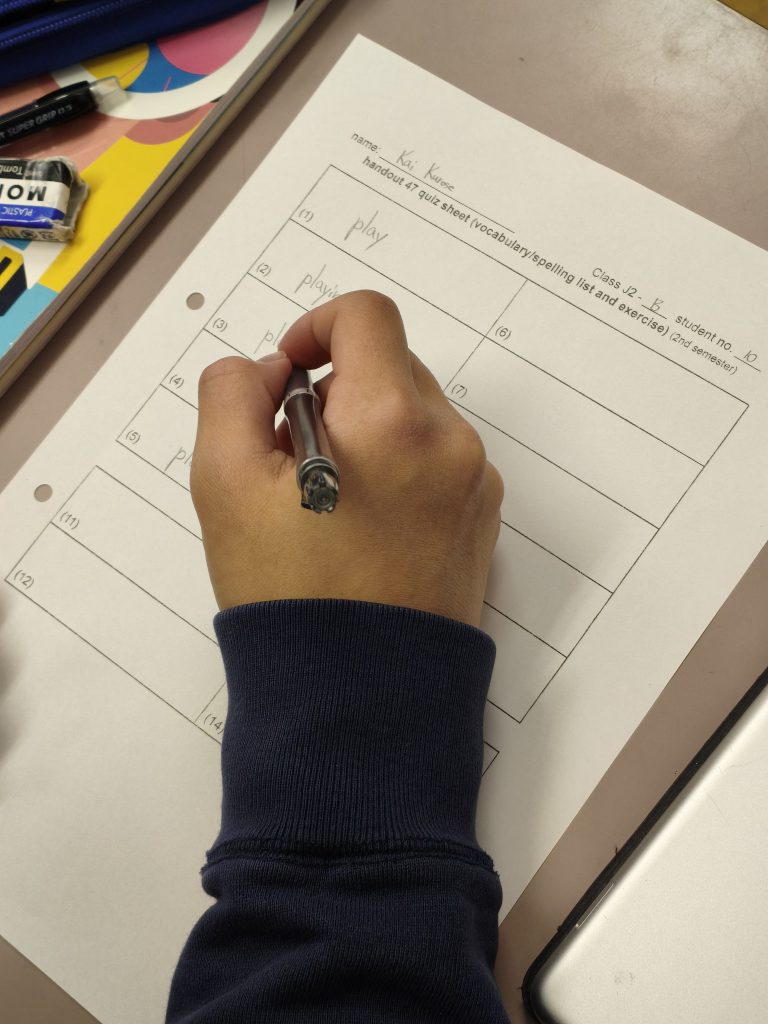
授業前半は、先生がテンポよく単語を提示し、生徒が一斉に書きとりをするスタイルで進みます。狙いは、この単語はその後の授業で使われるキーフレーズになっています。
今回扱っていたのは、たとえば次のようなセットです。
play / playing / played / has played
plan / planning / planned / has planned
他の単語は以下の通り。
hungry(お腹がすいた) / thirsty(のどがかわいた) / messy(散らかっている)
take a nap(昼寝をする)
ruler(定規) / scissors(はさみ)
先生は音と つづり を大切にして丁寧に板書しながら説明しました。
■3.つづりの理由がわかる:CVCルール(-ing / -ed)
「planning はどうして n が2つ?」という場面で登場したのが、つづりの基本ルールです。
先生は CVC(子音・母音・子音) の形に注目し、
CVCのときは 最後の文字を重ねて -ing / -ed をつける
stop → stopping / stopped
plan → planning / planned
という考え方を、短い例で繰り返し確認していました。
こうした“理由があるルール”は、暗記よりも定着が早く、書く場面でのミスも減ります。
■4.“because / so” で原因と結果をつなぐ
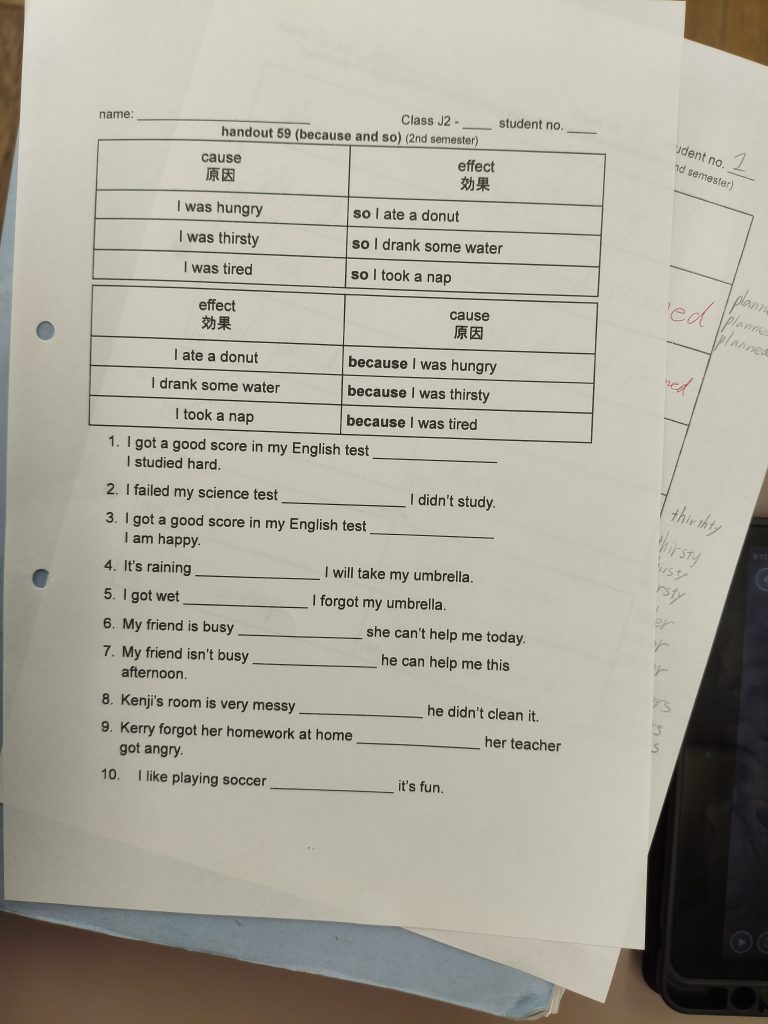
後半の中心は Cause & Effect(原因と結果)。先生は日本語の「原因/結果」と対応させながら、
I was hungry, so I ate a donut.(原因 → 結果)
I ate a donut because I was hungry.(結果 → 原因)
という2パターンを、まずは全員で何度も口に出して確認します。
その後、プリント(または口頭練習)で「どっちが原因?どっちが結果?」を都度問い、接続詞を選ぶ練習へ。
例として授業で出てきた文は、
I was thirsty, so I drank iced tea.
I was tired, so I took a nap.
など、日常の行動に結びつくものが中心でした。意味が想像しやすいので、生徒が「文の形」と「内容」をセットで理解しやすい構成になっています。
■5.復習:所有格(grandmother’s / grandparents’)
授業の終盤では、前回内容の復習として アポストロフィ(’) の使い分けも扱いました。
grandmother’s house(1人の所有)
grandparents’ house(複数形で s があるとき:s の後に ’)
「短く・確実に」確認して次へ進むのがこの授業のテンポ。
“前回の知識を置き去りにしない” という意図がよく表れていました。
■6.許可表現:Can / Could / May I … ?
最後は、許可を求める表現を 丁寧さの違い とセットで練習します。
Can I borrow your pencil?(ふつう)
Could I borrow your pencil?(より丁寧)
May I borrow your pencil?(かなり丁寧)
さらに答え方も確認し、
Yes, you can. / No, you can’t.
Yes, you could. / No, you couldn’t.
Yes, you may. / You may not.
と、“言って終わり”ではなく会話として成立する形にしていました。
ruler や textbook、iPad など身近な語を入れて、笑いも交えながら何度も口に出すことで、自然に定着していく様子が印象的でした。
■7.まとめと次回予告
今回の授業は、難しい説明を長くするよりも、反復→修正→反復で「正しい形を体に入れる」時間でした。
文法は“知っている”だけでは使えません。短い文をテンポよく言い換えながら、口から出る英語にしていく授業設計が貫かれていました。
次回は、〔Mayの続き/SVO・SVC・SVOCなど文型〕を扱い、さらに「文を組み立てる力」を伸ばしていく予定です。
■生徒インタビュー
RKさん
SNさん
Q 今日の授業の感想を教えてください。
R 今日の授業はいつもやっているのと同じような流れで進みまし た。わかりやすくて安心して勉強できたと思います。
Q 普段の授業はどんな感じで進みますか?
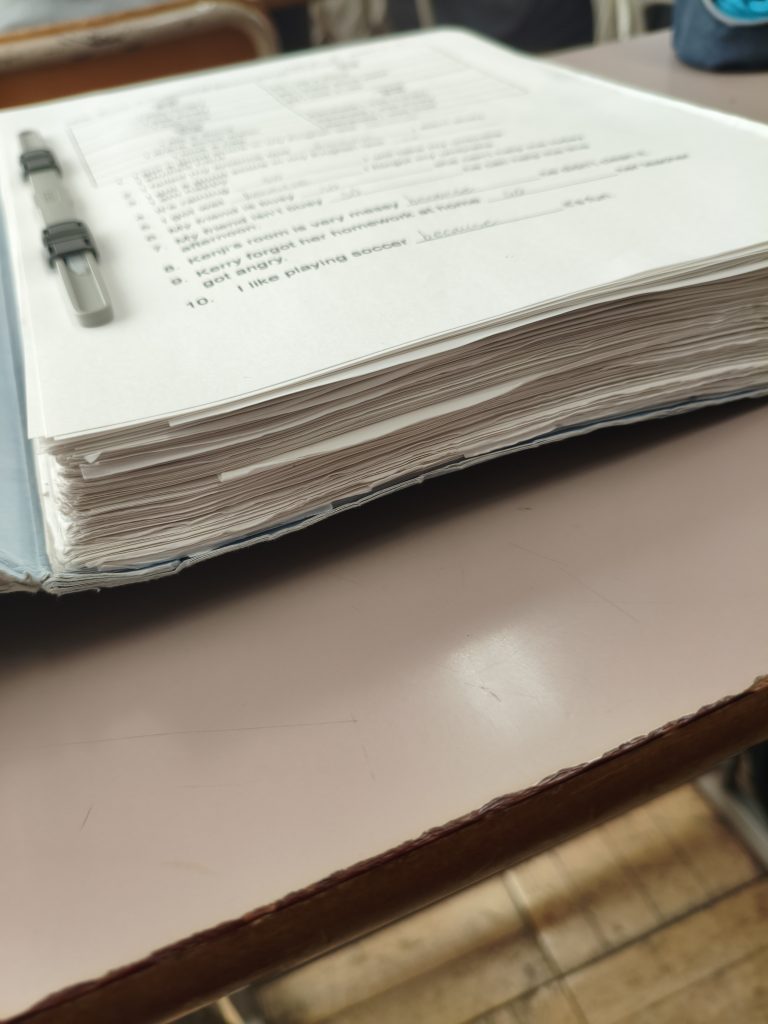
S 文法や語法などをスライドや板書で説明してくれたり、プリントに記入したり、先生が用語の使い方のお手本を示してくれたり、例文を書いてくれたりなどで授業が進みます。
R わからないところがあったら、親身に教えてくれます。また、プリントを配ってくれるのですが、そのプリントに意味などの説明が書いてあってそれが分かりやすいです。
Q 授業の雰囲気はどうですか?
R これをやらなきゃいけないっていうガチガチの授業ではなくて、先生から質問してくれたり生徒から質問したり、先生もジョークを言ってくれたりと楽しみながら受けられる授業です。
S 先生が安心して授業を受けられる雰囲気を作ってくれます。生徒は授業中順番に指名されるのですが、わからないときは先生が優しくヒントをくれたり、うまくサポートしてくれたりします。だから、過度な緊張しないで授業を受けられる雰囲気です。
Q 英語は好きですか?
S 好きです。
R 好きな方です。
Q どんなところが好きですか?
S 知らなかった言葉を覚えて、話せるようになることが楽しく感じます。道で困っている外国の人を助けることもできます。
R 言語という意味で日本語と同じで、外国の人と意思疎通できるところが好きです。
Q 友利先生に一言!
R いつも楽しい授業をしてくれてありがとうございます。これからも楽しみながら学んでいきたいです。
S 友利先生の授業で結構英語が身についてきています。先生も自信を持って授業をしてください。
■友利先生の想い
When a person realizes that they can interact with others in English, I firmly believe that they will naturally search for better words and grammar to communicate better. This will motivate them to learn more and study more.
This is a challenging process and so this is why I aim to provide a comfortable classroom experience where students hopefully feel that they can learn from each other. Not only as learners of English but as fellow human beings.
I noticed that some students where confusing to use of “because” and “so” especially if they were thinking of “dakara” and “sore de”. One of the biggest challenges in teaching English is that students keep translating English sentences into Japanese. There are times when this can be inimical to the mastery of English. Students should slowly begin to think in English rather than translating English to Japanese in their heads. This is why I avoided using these Japanese terms. Instead, I wanted to show how to use these words in terms of cause and effect. Therefore, if a cause precedes the effect in an English sentence, we can use “so”; and if an effect precedes a cause, we can use “because”.
(英語で他の人と交流できることに気づいた人は、より良いコミュニケーションのために、自然とより良い言葉や文法を探すようになると確信しています。これが、より深く学び、より深く学ぶ意欲につながるのです。
これは挑戦的なプロセスです。だからこそ私は、生徒たちが英語学習者としてだけでなく、同じ人間として、互いに学び合えると感じられるような、快適な授業環境を提供することを目指しています。
今日のレッスンについてですが、生徒の中には、「because」と「so」の使い方に戸惑っている子がいました。特に「だから」と「それで」について考えている生徒が多かったです。英語を教える上で最も大きな課題の一つは、生徒が英語の文章を日本語に翻訳し続けることです。これは英語の習得を阻害することもあります。生徒は頭の中で英語を日本語に翻訳するのではなく、ゆっくりと英語で考えるようにする必要があります。そのため、私はこれらの日本語の用語の使用を避けました。代わりに、原因と結果という観点からこれらの言葉の使い方を示したかったのです。つまり、英語の文章で原因が結果の前に来る場合は「so」を使い、結果が原因の前に来る場合は「because」を使うことができます。)
■まとめ
母国語が日本の生徒に英語の授業を英語で説明すると細かい内容が理解できないのではないかと思いました。ところが、生徒と一緒に受けてみると、最初こそ聞き取れなかったですが、不思議と次第に慣れていき、理解できるようになっていきます。日本語モードから英語モードに耳や頭が切り替わるのに少し時間がかかるからなのかと思います。授業の最初に生徒が英語の聞き取りを行ってたのですが、この時間はまさしく英語の体にシフトするために大事な時間なのだと思いました。また、オールイングリッシュだと、知らない単語があっても文脈からある程度推測する力がつき、会話のリズムも学ぶことができます。
友利先生は生徒を観察しながら、ゆっくり、時には何度も発音し、生徒の学習スピードに合わせて授業を展開されていました。生徒たちも、過度の緊張をすることなく学びに向かっていた姿が印象的でした。
(取材・記事 昭和女子大学現代教育研究所 研究員 本岡泰斗)
以下 友利先生の授業内の発言全文になります。使用している単語のレベルなどの参考にご覧ください。
Okay. Hello. Hello. Hello.
Good morning.
Last night it snowed.
Today it will snow again. Why?
Hokkaido.
It’s too cold for me. Too cold.
All right.
Okay. We’ll just start.
Okay, everyone, let’s start.
Number one. Very easy. Number one. Play.
Play, play, play… play video games.
Number two. Playing.
Number one is play. Number two is playing. Easy.
Number three… very easy. Played.
Number four… two words. Has played.
Number five. Plan.
Check out plan.
Number six. Be careful. Planning.
Number seven. Planned.
Number eight. Has planned.
Number nine. Hungry.
Number ten. Thirsty.
Very good.
Number eleven. Spelling. Messy.
Dirty. Messy.
Number twelve. Three words. Take a nap.
Number thirteen. Ruler.
R to L. Ruler.
Number fourteen, last one. Scissors.
Scissors. (Not science.) Scissors.
Okay, let’s check.
So, number one: play.
Number two: playing.
Number three: played.
Number four: has played.
Now we have to do plan… planning… planned… has planned.
Okay, remember: consonant, vowel, consonant.
CVC rule: double the last letter, and then plus -ed or plus -ing.
Okay, let’s do one more.
Another example: stop.
Stopped.
Stopping.
Let’s review: spray → spraying.
Look at this one: begin → beginning.
CVC… swimming.
Maybe one more: taxing.
Okay, so let’s stop here then.
Okay, everyone, please repeat after me.
Cause and effect.
So in Japanese: genin and kekka.
Okay, today we’re going to think about because and so.
Because and so.
Let’s see.
I was hungry. That’s the cause.
I ate a donut. That’s the effect.
One more time: I was hungry, so I ate a donut.
Okay.
I was thirsty, so I drank iced tea.
One more: I was tired, so I took a nap.
Now let’s do because.
Effect… “I ate a donut.”
Cause… “I was hungry.”
So: I ate a donut because I was hungry.
So and because. So and because.
Let’s practice with a handout.
Cause, effect. Effect, cause. Because.
Okay, everyone check.
The effect is: you got a good score. Because you studied hard.
The effect is: you failed the science test. And the cause is: because you didn’t study.
It’s raining… that’s the cause, and umbrella is the effect.
Today we did because and so.
We’re going to practice this one more time next time.
One more topic. Let’s change the topic.
Review last time. Apostrophe, right?
For example: grandmother.
Grandmother, grandfather becomes grandparents.
Plus house.
So if it’s only one grandmother… but these are grandparents…
You have to put the s: grandparents’ (apostrophe).
Okay, let’s practice.
Everyone repeat after me: Grandparents’ house.
One more time.
Very good.
Can… could… could not.
Have to… had to.
Must… had to.
So the past of must is had to.
I had to do homework when I was in elementary school.
Can and could for asking permission.
Can is okay. Could is more polite. May is very polite.
One more time:
Can I borrow your pencil?
Could I borrow your pencil?
May I borrow your pencil?
If I say “Can I borrow your pencil?” change it to could.
Easy one first. Change.
Very good.
Can I borrow your ruler?
Can I borrow your textbook?
Can I borrow your iPad?
Now change it to may.
If I say “Can I borrow your ___?” you have to change it to “May I borrow your ___?”
Yes, you can. No, you can’t.
Could I borrow your ___? Yes, you could. No, you couldn’t.
May… Yes, you may. No… You may not.
Can I borrow your bicycle?
Can I borrow your eyeglasses?
Could I borrow your tennis racket?
Could I borrow your shoes?
May I borrow your eraser?
May I borrow 10,000 yen?
Okay, you got the idea.
Any questions?
No?
Okay. Next time… we have to practice may, and then SVO / SVC / SVOC next time.
All right. So let’s stop here and relax and wait for the bell.